How do I track fixed assets and depreciation?
Register an asset, let Fullfinity build its depreciation schedule and post it each period, then close or dispose of it at the end of its life.
Equipment, vehicles and furniture last for years, so their cost is spread over their useful life as depreciation. Register each one as an asset: Fullfinity builds the schedule and posts the depreciation for you.
1. Register the asset
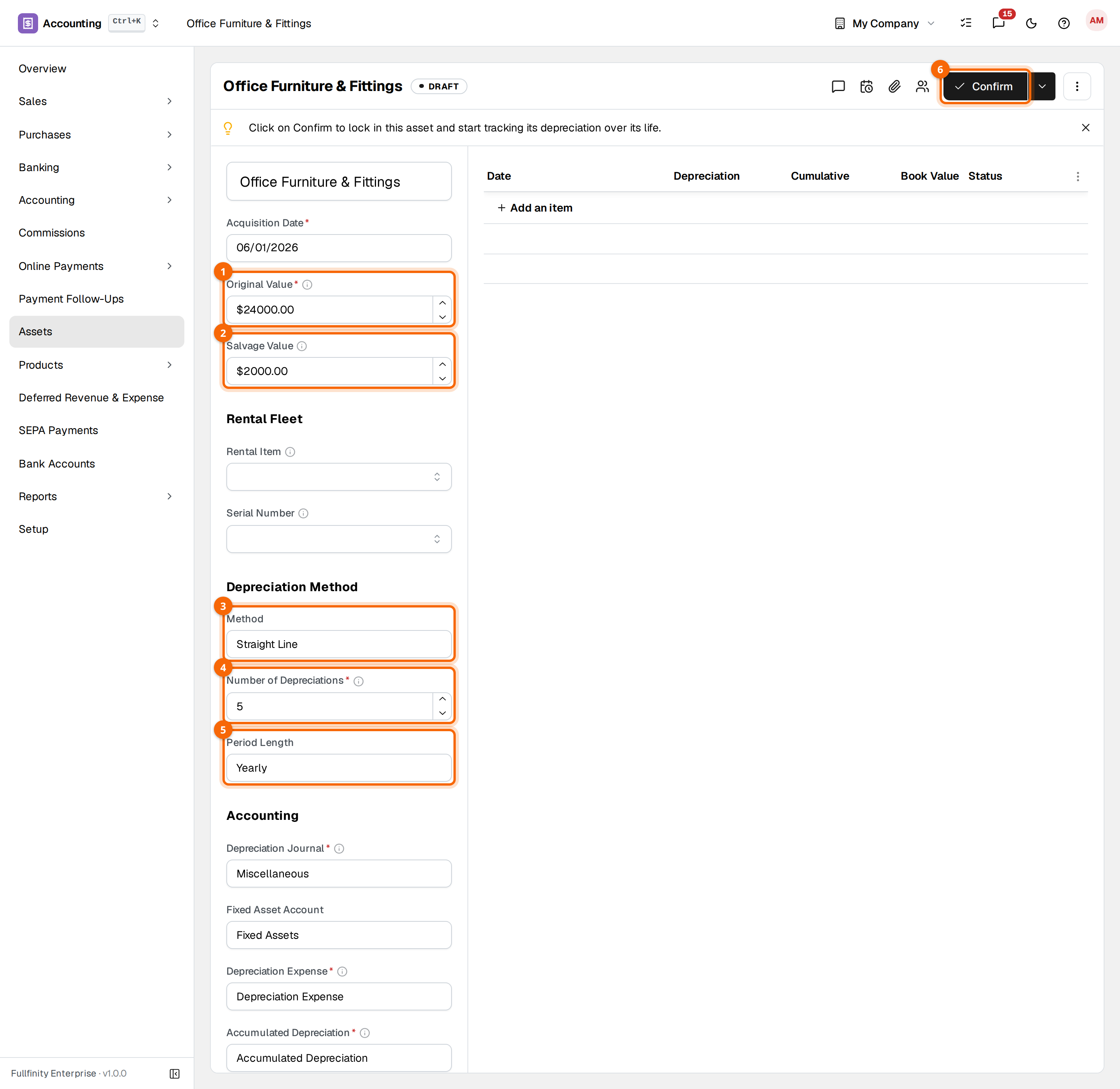
- Go to Assets and click New. Type the asset's name.
- Acquisition Date and Original Value — when you bought it and what it cost.
- Salvage Value — what it will still be worth at the end; this part isn't depreciated.
- Under Depreciation Method: the Method, the Number of Depreciations and the Period Length (Monthly or Yearly). Five years monthly is 60 and Monthly.
- Check the accounts under Accounting: Fixed Asset Account, Depreciation Expense, Accumulated Depreciation and the Depreciation Journal. They start from your chart of accounts.
| Method | How it spreads the cost |
|---|---|
| Straight Line | The same amount every period. |
| Declining | More at the start, less later. Declining Factor sets how fast (2 is double-declining); a period never takes less than an even share of what's left. |
2. Start depreciating
Click Compute Depreciation to see the schedule on the Depreciation Board, change the asset and compute again until it's right, then click Confirm. The asset becomes Running and its details can no longer be changed.
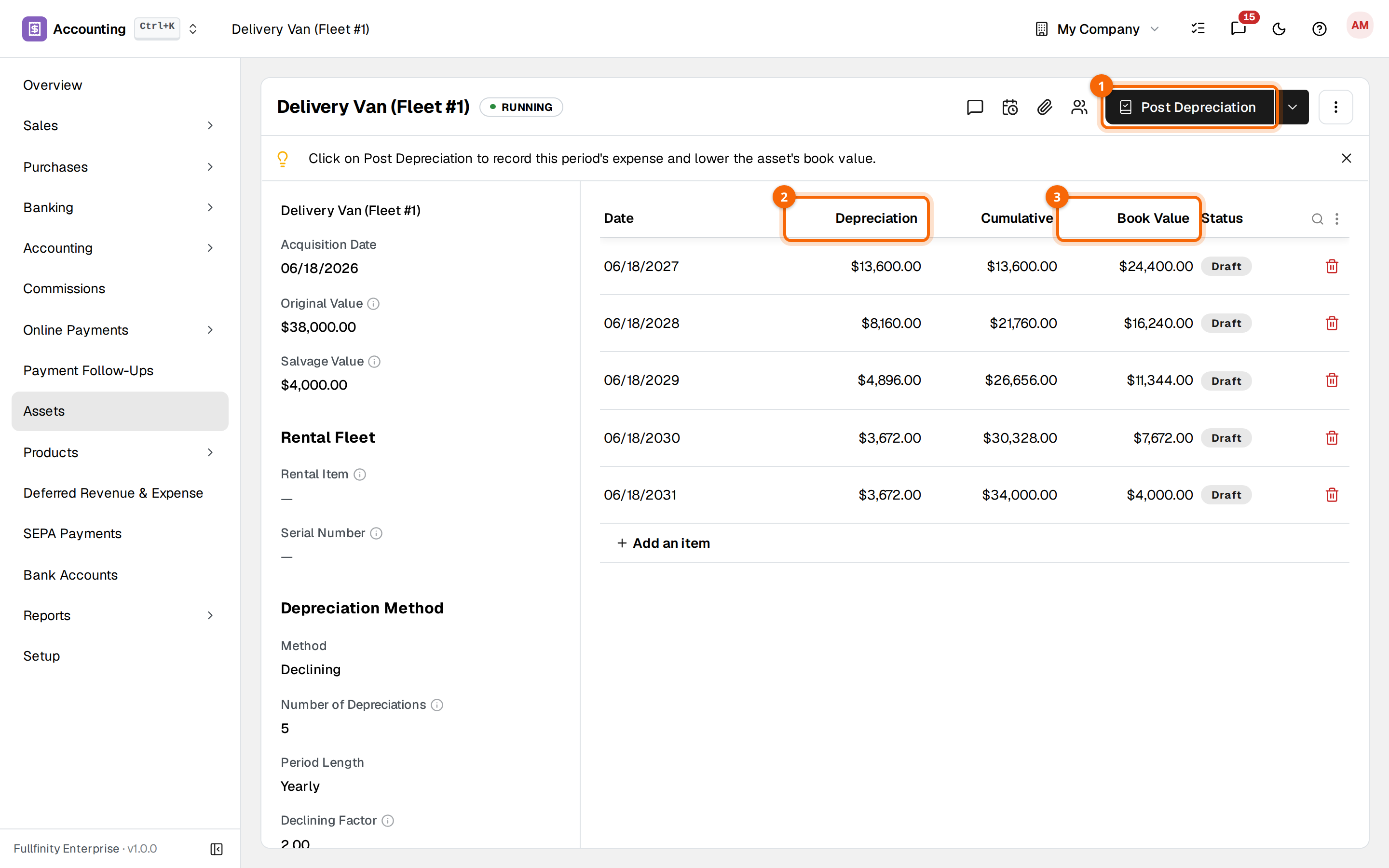
The first depreciation falls one period after the acquisition date. Every day, Fullfinity posts each depreciation whose date has come; you can also click Post Depreciation to post what's due now. Book Value goes down with each one, and when the last is posted the asset is Closed.
3. At the end of its life
- Close — for a fully depreciated asset you keep using.
- Dispose — when you sell, scrap or write it off. Set the Disposal Date (blank means today). For a sale, enter the Sale Proceeds and the Buyer. Fullfinity posts the depreciation owed up to that date, removes the asset from the books, and books the difference between the proceeds and the book value as a gain or loss.